Thursday, April 17, 2014

Temperate Forest Travel Blog

Temperate Forest


Have you ever spent a day walking through a forest, observing its beauty? If you answered no, then I am inclined to inform you that you have been missing out on something truly spectacular. Truthfully, I would feel no insult if you packed your bags right now and set out to experience this phenomena without even reading what I have to say next. However, it may be in your best interest to learn a little bit about forests before you embark on your journey. Particularly, I will be introducing you to a specific type of forest known as a temperate forest. But before I go to the what, I must first mention the where.


So where in the world are temperate forests? Well, they can be found in Eastern and Western United States, Eastern Asia, Eastern Australia, Central and Western Europe, and in the very bottom region of South America (particularly Chile). To better visualize the regions where they exist, the map below marks the world's temperate forests in black.


http://apestemperateforest.weebly.com


Abiotic Features: 


The Temperate Forest is know to receive high levels of precipitation. It has a annual precipitation between 20 and 60 inches, with rainfall occurring in every month of the year. In addition to rainfall, temperate forests also receive precipitation in the form of snow. As for its temperature, its average temperature for a year is 50 degrees F. However, during the winter the temperature can drop to lows of -22 degrees F, and during the summer the temperature can reach highs of 86 degrees F. Day to day, to weather is known to change frequently. The best time to travel to one of these forests would be during the spring, because temperatures shouldn't drop below freezing, and there shouldn't be any snow. As far as clothing goes, it would be best to bring a rain jacket, in addition to layers of clothing to avoid getting cold. Most of the time, you should be able to remove the most layers. Another essential is to have a good pair of sneakers.


http://earthobservatory.nasa.gov/Experiments/Biome/graphs.php

http://earthobservatory.nasa.gov/Experiments/Biome/graphs.php


http://pulitzercenter.org/slideshows/sichuan-province-jiuzhaigou-national-park-ecosystem-biodiversity-logging


The soil type of the temperate forest is very rocky and sandy. However, the top layer of the soil is covered by an organic layer made up of decomposed plants and animals. Overall, the soil is very poor in mineral nutrients.


http://www.ri.net/schools/West_Warwick/manateeproject/Temperateforest/land.htm

The sunlight on the forest floor is quite poor. This is because the tall trees block nearly all of the sunlight from passing through.

http://en.wikipedia.org/wiki/Ricketts_Glen_State_Park

The tall trees help provide shelter to animals on the floor below. Squirrels, raccoons, and insects can all take shelter in hollow trees. Dead trees provide maybe the best shelter. They are perfect places for small animals like rabbits and squirrels. Additionally, shelter can be found underground, as some animals can dig burrows, as well as in caves, which can hold any animal, even bears.


Biotic Features:


Primary Producers: Trees, shrubs, grasses, ferns, and flowers. Some specific examples include Pine Fur, Hemlock, Sequoias, Sweet Gum, and Spruce. These plants use their chlorophyll to create food. Coniferous trees, which create a large canvas that covers 70% or more of the sky, produce an abundant amount of edible seeds.

http://www.morganarboretum.org/ENGLISH/nature/flowers.html


Primary Consumers: Herbivores such as deer, rodents, birds, and insects. These animals depend on plants for their source of food.


Secondary Consumers: Include amphibians, raccoons, insects, and bigger birds. They eat plants, small animals, and insects.

Tertiary Consumers: These include wolves, bears, cougars, and any big animal at the top of the food chain. These animals depend on both plants and other animals.


http://truthbehindthetriangle.edublogs.org/2011/08/07/bermuda-forest/


Decomposers: Fungi, Bacteria, Worms. Fungi are the most important decomposers. Fungi and Bacteria break down cellulose, which allows tree trunks and leaves to decompose and return their nutrients to the soil.

http://www.ucmp.berkeley.edu/fungi/fungi.html


Food Web:


http://pulpbits.com/7-diagrams-of-rainforest-animals-food-chain/temperate-rainforest-food-chain-2/


Human Influence:   The human population is impacting the forests by deforestation, hunting, and pollution. In the areas where deforestation occurs, due to either logging or farming, the soil loses nutrients and the potential for plant growth. This can further lead to soil erosion. Next up, hunting can cause the interruption of biodiversity and the balance of the food chain.  Invasive species can arise which can threaten many inhabitants of the temperate forest. Lastly, acid rain is a very destructive pollution from the mixture of car and power plant exhaust with rain causing the death of trees and plants, as well as animals in lakes or ponds.


http://www.greenpeace.org/new-zealand/en/campaigns/ancient-forests/threats/


http://www.greenpeace.org/international/en/news/features/ancient-forest-summit-ends/


http://science.howstuffworks.com/nature/climate-weather/atmospheric/acid-rain.htm


Many evolutionary adaptations have allowed plants and animals to survive within the temperate forest biome. The trees have broad green leaves and have an apical dominance which helps capture sunlight. Also trees have developed into deciduous trees, which lose their leaves as the temperature becomes cold during the winters. The trees are not able to protect their leaves as the temperature drops, so they cut off the supply of water to the leaves and then shed the leaves.  As spring arrives and the temperature becomes wrier, the trees grow new leaves. Animals have also adapted to the cold temperatures by either migrating to warmer climates or hibernating. Some animals have a symbiotic relationship by sharing a den for warmth. Some animals grow a heavy winter coat which they lose in the summer. Lichens are very important in temperate forests by producing nitrogen which helps with fertilization of the forest.  Lichens exists as a symbiotic relationship between fungi and cyanobacteria or alga. Lichens, as well as mosses have adapted by becoming epiphytic. They grow on trees in a symbiotic relationship and continue to move higher on the trees where they receive more sunlight and can stay away from herbivores.


http://design-newyork.com/blog/page/46/

Symbiotic Relationships also occur in any case where a seed is eaten by a consumer. The consumer benefits in this situation by obtaining food to eat, and the plant benefits in this situation by spreading its seeds to a new location (wherever the consumer releases its feces).


Sources:


Monday, April 14, 2014

Animal Behavior Lab Report


Color’s Effect on a Roly-Poly’s Choice of Shelter


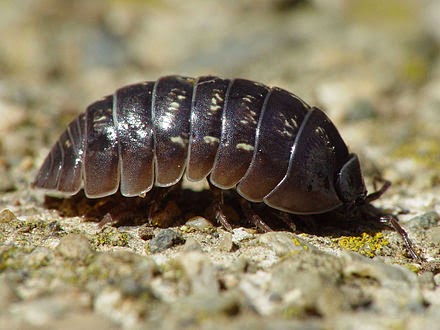
ABSTRACT: In this lab, our goal was to find out whether or not the colors of rocks have an effect on a roly-poly’s decision of where to find shelter. For our experiment, we placed 12 roly-polies in a choice chamber, which can be described as two petri dishes with an area of crossover (pictured below). We filled one side of the choice chamber with green rocks, and the other side with clear rocks. The green rocks were rigid while the clear rocks were smooth and spherical. At the start of the experiment, we placed 6 roly-polies on each side of the choice chamber and put on a cover. Then at 30-second intervals, we took off the cover, recorded the new numbers, and recovered the chamber. After 5 minutes of testing, our experiment was concluded. Our final results showed that the number of roly-polies on the side with green rocks had increased to 8, and the number of roly-polies on the side with clear rocks had decreased to 4.

http://www.enasco.com/product/SB48162(X)M

http://en.wikipedia.org/wiki/Armadillidiidae


INTRODUCTION: Before doing this experiment, it is good to know some background on animal behavior. So what is behavior? Behavior can be defined a reaction to a stimulus. For an animal, this is a visible activity, or simply what the animal does (its movements), in response to an external or internal change (Dugatkin, 2012). When dealing with animal behavior, there are two different types of questions that one can ask. They can either ask a proximate question, or an ultimate question. A proximate question is one that deals with the how. What you are asking is how an internal or external stimuli was able to trigger that animal to have a specific behavioral reaction. An example of a proximate question would be “how does a bird know when and when not to sing”. With this question you are searching for the environmental stimuli responsible for the behavior. An ultimate question is one that deals with the why. It is a question that one asks when they want to know why an animal does what it does, or why it is triggered by a certain stimuli. For example, an ultimate question that you can ask is “why does a bird sing”. These are the kind of questions that make you search for the evolutionary benefit that this behavior would have for the animal.

http://sulaimansait.blogspot.com/2011/04/singing-bird.html

         Animal behavior can be categorized into different types. One of these specific types of behavior is known as fixed action pattern. Fixed action pattern is instinctive, meaning that it is with the animals from the day they are born. Fixed action pattern causes all members of a specific species to carry out the exact same sequence, without ever learning it from their parents or other older members. Even if the action becomes impossible to perform, the animal will still carry out the motions of that action. For example, a dog will always know how and when to bark, even when kept in isolation. Additionally, if a dog is physically unable to bark, it will still go through the normal motion of barking whenever it is stimulated to. Another example of fixed action pattern occurs in apes. It has been shown that apes always know to be afraid of snakes. This fear even occurs when they are raised in isolation and a fake snake, instead of a real one, is placed in front of them.
         Another type of animal behavior is imprinting. Imprinting can be defines as a type of animal learning that only occurs at a specific period in the animal’s life, and is generally learned very quickly. The most common type of imprinting is called filial imprinting, in which young birds learn to both recognize their parents and follow them around. This occurs because baby birds form strong attachments to the first thing that they see, which is often the mother. A proximate cause for filial imprinting in young geese is that in their early stages of development, they see their mother walk away from them, calling for them to follow. An ultimate cause for filial imprinting in young geese is that following their mother gives them an increased chance for survival, as they will receive protection from their mother, and will learn from her the necessities for survival.
        
http://www.scienceclarified.com/everyday/Real-Life-Biology-Vol-3-Earth-Science-Vol-1/Instinct-and-Learning-How-it-works.html#b
http://castlehs.com/users/johlsen/BEHAVIOUR.htm

         Interestingly, a man named Konrad Lorenz tried an experiment where he put some geese eggs in an incubator. When the eggs hatched, Lorenz was the first thing that the baby geese saw. As a result, they spent rest of their lives following Lorenz around. The geese even attempted to mate with humans.

http://castlehs.com/users/johlsen/BEHAVIOUR.htm

         Two more types of animal behavior are taxis and kinesis. In taxis, an animal moves toward or away from a stimulus. An example would be when birds migrate towards warmer climates, and away from colder climates. Heat is a stimulus for the birds, and that is why they move toward it. In kinesis, the movement of the animal is completely random, and not toward or away from the stimulus. For example, when you turn on a light, cockroaches start jumping in all different directions. They don’t move toward or away from the stimulus, but rather move in completely different and random directions.

http://www.bubblews.com/news/1258321-how-do-migrating-birds-find-their-path

http://www.fws.gov/alaska/nwr/arctic/birdworldmig.htm

Another type of animal behavior is conditioning. The two types that I will mention are called classical conditioning and operant conditioning. Classical conditioning occurs when a neutral stimulus becomes associated with a stimulus that evokes a specific response. For example, the presence of food evokes a specific response from a dog (it thinks about food). However, if the owner of the dog rings a bell every time that he feeds the dog, the sound of the bell, which would normally be a neutral stimulus, will become associated with eating food, and the dog will think about food every time that the bell is rung. Now operant conditioning is a bit different. Operant conditioning occurs when an animal is rewarded or punished for their behavior, or a specific response. The animal makes an association between a behavior, and the consequences for that behavior. For example, when you give your dog a treat when he shakes your hand, he will associate shaking your hand with getting the treat, and will want to shake your hand.

http://cnx.org/content/m44879/latest/?collection=col11448/latest

http://dogrus.wordpress.com/2010/03/15/training-your-dog-to-shake-hands/

         Now that I have introduced you to animal behavior, and showed you a some specific types and examples of these types, you should have no issue understanding this experiment.


QUESTION: Does the color of a rock effect a roly-poly’s decision of whether or not to use it as shelter? Or are roly-polies even attracted to certain colors at all?


HYPOTHESIS: If six roly-polies are placed on each side of the choice chamber, with green rocks on one side and clear rocks on the other side, then all of the roly-polies will end up on the side with the green rocks by the end of the experiment, because the roly-polies will be attracted to the green color due to the fact that their mind will connect the color green with food, such as the plants they eat. The color of the rocks, clear and green, are the independent variables in this experiment, and the number of roly-polies on each side is the dependent variable. The numbers will be compared to a control, in which we placed the roly-polies in the choice chamber with no rocks on either side.


MATERIALS:

1. 12 Roly-Polies

2. Stock Chamber

3. Choice Chamber

4. Small Green Rocks

5. Small Clear Rocks

6. Paint Brush

7. Cover

8. Stopwatch


PROCEDURE:

1. Collect 12 Roly-Polies.

2. Add Green Rocks to one side of Choice Chamber.

3. Add Clear Rocks to other side of Choice Chamber.

4. Transfer Roly-Polies from Stock Chamber to Choice Chamber.

5. Put six on each side (use paint brush to move them). 

6. Start stopwatch and cover Choice Chamber.

7. Remove cover every 30 seconds, record new numbers, and then recover the Choice Chamber.

8. Continue for a total of 5 minutes.

9. Return Roly-Polies to Stock Chamber.

10. Put the Green and Clear Rocks back in their respected beakers.

11. Graph data using Excel.


RESULTS:


Time (Mins)
Number of in Roly-Polies in Chamber with Green Rocks
Number of in Roly-Polies in Chamber with Clear Rocks
0
6
6
0.5
7
5
1.0
8
4
1.5
8
4
2.0
8
4
2.5
8
4
3.0
8
4
3.5
8
4
4.0
8
4
4.5
8
4
5.0
8
4


CONCLUSION: Our results show that the roly-polies prefer the green rocks. This could mean that they prefer to find shelter under the green rocks because the color reminds them of the food that they eat, such as leaves. Since the number of roly-polies on each side did not change in our control, in which we placed them in a choice chamber with no rocks on either side, then our results show that their was in fact a response by the roly-polies in our experiment. These results that we obtained fail to reject my hypothesis that the roly-polies would be attracted to the green color of the rocks. Animal behavior in the form of classical conditioning is taking place if my results are accurate, because the roly-polies are associating the color green, a neutral stimulus, with their source of food, another stimulus. For further research, it would be ideal to set up another experiment in which we place a green piece of paper in one side of the choice chamber, and a white piece of paper in the other side of the choice chamber. Going back to the experiment we just did, I would like to state two constants. First, we kept the amount of rocks on each side fairly constant, with both sides being filled. Second, we kept the lighting and the temperature of each side constant, so that they had no effect on the results. Moving on, one possible source of error is that we did not take into consideration the fact that the clear rocks were smooth and spherical, while the green rocks were rough and shaped more like normal rocks. The roly-polies could have just moved to the side with the green rocks because they preferred the shape and texture of the green rocks, not the color. Another possible source of error is that we place six roly-polies in on each side, instead of placing all twelve in the center. By placing six on each side, it is possible that the two roly-polies that switched sides did so randomly. If we placed them all in the center, we would have been better able to tell if the roly-polies preferred one side to another.


CITATION:


Dugatkin Ph.D, Lee Alan. "What Is "Behavior" Anyway?"
Psychology Today. Sussex Publishers, LLC, 17 July 2012. Web. 14 Apr. 2014. <http://www.psychologytoday.com/blog/the-prince-evolution/201207/what-is- behavior-anyway>.

Quick, Kevin, Holly Kiamanesh, Rosie Montague, Jennifer
Blanchette, and Barbara Akre. The Webb Schools Honors Biology Textbook. Claremont: CK-12 Foundation, 2012. eBook.

“What is Imprinting?.” wiseGEEK. Conjecture Corporation. Web.
14 Apr. 2014. < http://www.wisegeek.org/what-is-imprinting.htm>.

http://castlehs.com/users/johlsen/BEHAVIOUR.htm


http://en.wikipedia.org/wiki/Imprinting_(psychology)


Wednesday, March 19, 2014

Osmosis Jones

     Last Class we watched Osmosis Jones. I remember watching this movie once as a kid, but I really did not understand what was going on besides the fact that Jones and Drix were trying to catch some bad guy. Now that I actually understand all of the biology behind the movie, I think that it is more educational than I thought.


http://www.deviantart.com/morelikethis/261191754


     The movie teaches you about how a white blood cell (Jones) can destroy bacteria and viruses. It also shows how a white blood cell can diffuse through vines and arteries to get to an infected area (as seen when Osmosis Jones diffuses through walls and other things).

     The movie also shows how the hypothalamus controls many of your body's homeostasis. When Thax (the virus guy) messed with the hypothalamus, he caused the temperature of Frank's body to go from 98.6 degrees ferinheight, which is the body's normal temperature, all the way up to 108 degrees, which can cause death (scarlet fever).

http://humanbiologylab.pbworks.com/w/page/74187719/homeostasis%20of%20body%20temperature


     Since I missed this on my test, I think that I should explained how homeostasis of body temperature works. First of all, this is a negative feedback system, so your body has a set temperature that it would like to stay at. When your body temperature increases, hypothalamus gets a signal that tells it to start sweating. When you sweat, the water is evaporated and heat is lost, allowing your body to cool down. When you are too cold, your hypothalamus gets a signal and tells your muscles to start contracting (shaking) which generates heat, warming your body.


     The movie also talked about how red blood cells transported oxygen throughout the body, which would be the respiratory and circulatory system.

http://physicsworld.com/cws/article/news/2011/jun/08/magnetic-fields-reduce-blood-viscosity

     There is a lot more that this movie goes over, but I would like to wait until I finish the movie before I talk about the rest of it.


Friday, March 7, 2014

Immune System Quiz

Explain how the immune system achieves all of the following


1. Provides an immediate nonspecific immune response


The immune system presents physical barriers, such as skin and mucus membranes, that prevent foreign substances (pathogens) from entering the body. The mucus traps microbes (bacteria microorganisms that cause disease) and sweeps them away, without knowing specifically what that bacterium is. Some more examples are blood clots in wounds (in which inflammation occurs and a large amount of white blood cells are brought in to fight whatever infection exists in that infected area), or flushing of tears or saliva (which wash away pathogens), all of which prevent infection. Two other examples, vomiting and diarrhea, both help get rid of harmful germs. Unfortunately, some substances, such as peanuts, can cause allergic reactions because your body attacks it as it would a virus. 


With infection or injury, inflammation occurs and phagocytes, which ingest harmful germs, are brought to that area. The complement system is activated. Many chemical agents are involved, such as Histamine, which allows for more white blood cells. There are also interferons, which limit virus replication, pyrogens, which cause fever to inhibit bacteria, lysozyme, which breaks down cell walls, and lactoferrin, which limits bacteria growth.

In addition to physical barriers, there are also chemical barriers, such as fatty acids in sweat that prevents bacteria growth. Lysosomes and phospholipase in mucus, saliva, and tears all break down cell walls, killing pathogens. 


2. Activates T and B cells in response to an infection


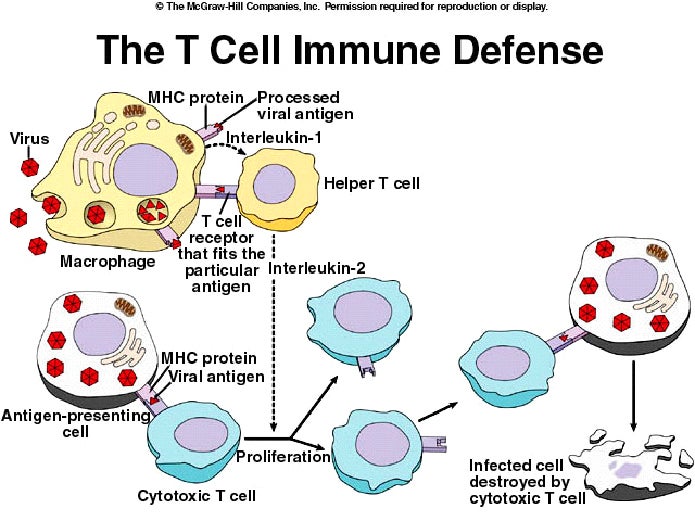
MHC molecules (Major Histocompatability Complex) are on the surface of most cells in the body. These MHC molecules interact with the T-receptor on T-cells and help these T-cells to recognize antigens, such as a virus. The MHC molecules bind to virus antigens on infected cells. This antigen presenting cell binds helper T-cells to activate helper T-cells or cytotoxic T-cells. Helper T-cells either activate cytotoxic T-cells or stimulate B-cells.


The T-cell signals the B-cell using cytokines to make a unique antibody that can kill a certain harmful antigen. Interleukin 1 from macrophages activate helper T-cells and Interleukin 2 from helper T-cells activates cytotoxic T-cells or B-cells.


3. Responds to a later exposure to the same infectious agent


Some of the T-cells and B-cells from the initial infection differentiate into longterm "memory cells", which are specific for the same harmful antigens that were previously seen. Therefore, those memory cells are more attracted to these antigens and respond faster and to a larger extent.


4. Distinguishes self from non self


Every cell in the body carries distinctive molecules that identify it as self. This set of unique molecules, or markers, are called major histocompatability complex (MHC) molecules. There are MHC I proteins that are on all cells, and MHC II proteins only on specialized cells. Nonself markers that cause an immune response are called antigens, which can be viruses, bacteria, portions of foreign proteins, or a MHC marker protein.


http://chaime.com.au/wp-content/uploads/immune2.jpg